

In this blog we’ll be discussing how to increase online visibility in traditional search and generative AI with your long-tail SEO strategy.
When we look at improving SEO performance for clients, we often discuss two approaches: the short tail strategy, which is predominantly used for optimising website pages that are designed to convert, and the long-tail strategy that harnesses peripheral traffic through information-rich, long-form content, such as blogs and articles.
This article explores the advantages of implementing a long-tail SEO strategy. Using real client case studies, we’ll demonstrate how long-tail keywords can significantly accelerate traffic and boost online visibility, while also showing you how to strategically combine informational pieces with powerful CTAs to offer your customers alternative pathways to relevant products and services.
Furthermore, we’ll explore how long-tail SEO directly feeds into GEO, using information-led content to influence generative AI tools and consolidate your position in AI Chatbots, as well as the importance of long-tail SEO on brand awareness.
What are long-tail keywords in SEO
Long-tail keywords are specific, multi-word search phrases, typically four words or more, that people type when they know exactly what they’re looking for. Think of the difference between someone Googling “waste management software” versus “best waste management software for councils looking to improve public services.” The second query is a long-tail keyword: more detailed, more deliberate, and far more telling about what that person actually wants.
Despite attracting smaller search volumes than broad “short-tail” terms, long-tail keywords collectively account for over 70% of all search traffic online. And for businesses looking to grow their visibility without going head-to-head with established giants, they’re a game-changer.
Why do they matter?
Because specificity signals intent, though not always the same kind. Long-tail searches tend to fall into two distinct categories.
Some users are deep in the decision-making process: someone searching “organic cotton women’s T-shirt under £30” isn’t browsing, they’re ready to buy. These high-intent queries are more likely to drive direct conversions.
Others are in full research mode, hunting for reliable, authoritative information on a specific topic. A query like “how to remove green algae from a fence” isn’t transactional; it’s exploratory. But it’s still highly targeted, and ranking well for it puts your brand in front of an engaged audience at exactly the moment they’re forming opinions and looking for sources they can trust.
There’s a competitive advantage in both cases. Fewer businesses are targeting these precise phrases, which makes it significantly easier to rank well in search results, especially for newer websites still building their domain authority.
In short, long-tail keywords help you attract the right people, not just more people, whether they’re ready to act now or building the knowledge that will bring them back to you later.
How to find long-tail keywords for SEO
There are various ways to find long-tail keywords, with differing levels of accuracy and therefore impact.
To create a fully considered and tailored long-tail keyword strategy, our team can help you with a keyword audit, encompassing research into key topics that align with your business to create a content plan of SEO-rich blog articles.
Not only are we able to plan your content, but we can also produce SEO-optimised content for you, written in your brand’s tone of voice, to attract peripheral searches and funnel readers towards relevant products or services on your website. By investing in a content retainer, we can ensure your website is kept up to date with new, optimised content.
Another function that can be extremely useful is the ‘People Also Ask’ feature on Google. By searching for queries around your business, Google will offer you a list of queries that users frequently search for, so you can harness this traffic and guide them to your products and services.
Similarly, you can utilise AI Chatbots by asking them for a list of long-tail queries centred around a relevant subject matter to your business. If you take this approach, remember to tailor the answers and align them with your business proposition to maintain trust and authority.
The link between long-tail SEO and GEO: be the authoritative voice
Long-tail SEO doesn’t just improve your visibility in traditional search results; it also feeds directly into Generative Engine Optimisation (GEO), the emerging practice of positioning your brand within AI-generated responses.
Tools like ChatGPT, Gemini, and Claude increasingly pull from authoritative, well-structured content when constructing their answers. By consistently producing specific, information-led content built around long-tail queries, you’re not just ranking on Google, but training AI tools to recognise your brand as a credible source worth referencing.
This matters more than ever as a growing number of users now turn to AI chatbots as their first port of call for research and recommendations. If your content answers the precise questions people are asking, in depth and with authority, it stands a far greater chance of being summarised, or cited by generative AI.
Long-tail keyword strategies and GEO are pursuing the same goal: demonstrating that your brand has the answers.
Done well, the two work in tandem to consolidate your presence across both traditional search and the AI-driven discovery that is rapidly reshaping how people find information online.
Defining who you are: The impact of long-tail SEO on brand awareness
If long-tail keywords attract smaller audiences, how can they build brand awareness?
The answer lies in consistency and credibility. Every time your content appears in response to a specific, well-formed question, you earn a touchpoint with someone actively seeking information in your space.
Over time, showing up repeatedly across dozens or hundreds of niche queries creates a cumulative effect: your brand becomes a familiar, trusted presence within your industry, even among users who aren’t yet ready to become customers.
There’s also a quality-over-quantity element in play here. A thousand visitors who found you while researching a topic you genuinely specialise in are far more valuable to your brand than ten thousand who stumbled across a generic term.
These are people who’ve already seen evidence that you know your subject, your content answered their question, spoke their language, and demonstrated expertise. That first impression carries a lot of weight. Whether they bookmark your site, share your article, or simply remember your name when the time comes to make a decision, long-tail SEO quietly builds the kind of brand recognition that paid advertising alone rarely achieves.
How our clients are utilising long-tail SEO strategies
At Browndog, we have been working with clients on their long-tail SEO strategy to increase traffic and boost online visibility both through traditional search and generative AI.
Bartec Municipal Technologies
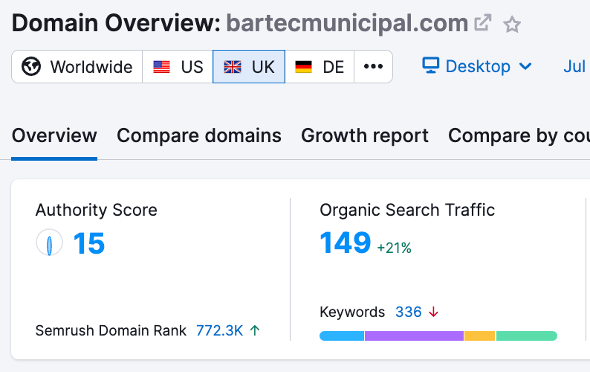
For the last 3 years, we have been working through a long-tail SEO strategy that aims to provide Bartec with credibility and authority in their field; waste management software for councils.
How it started:
How it’s going:
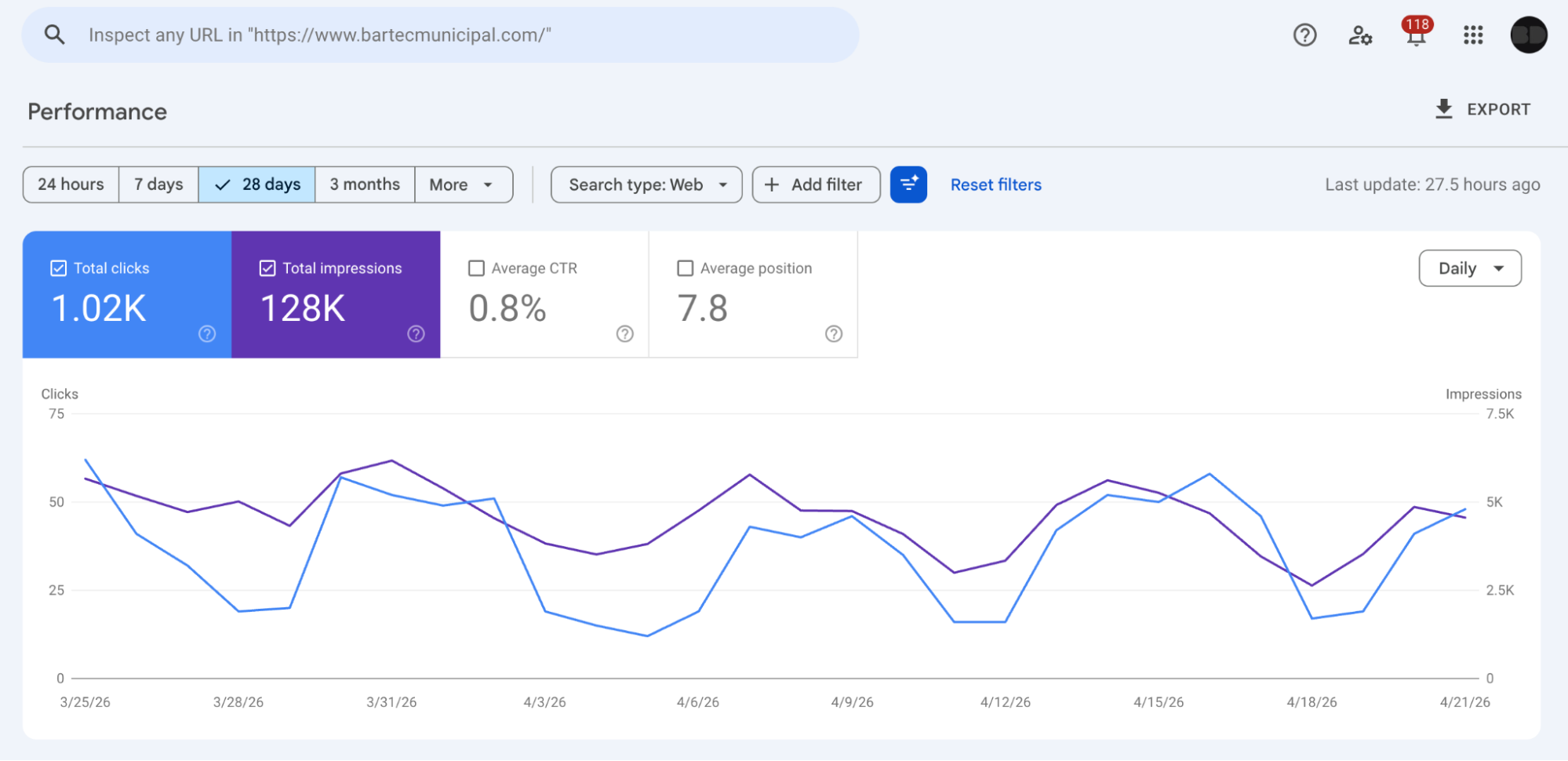
Our long-tail SEO articles focus on frequently researched terms around waste management within different waste streams such as domestic and commercial, changing legislation for councils around food waste and Simpler Recycling, and the importance of waste management within communities.
Top 10 pages:
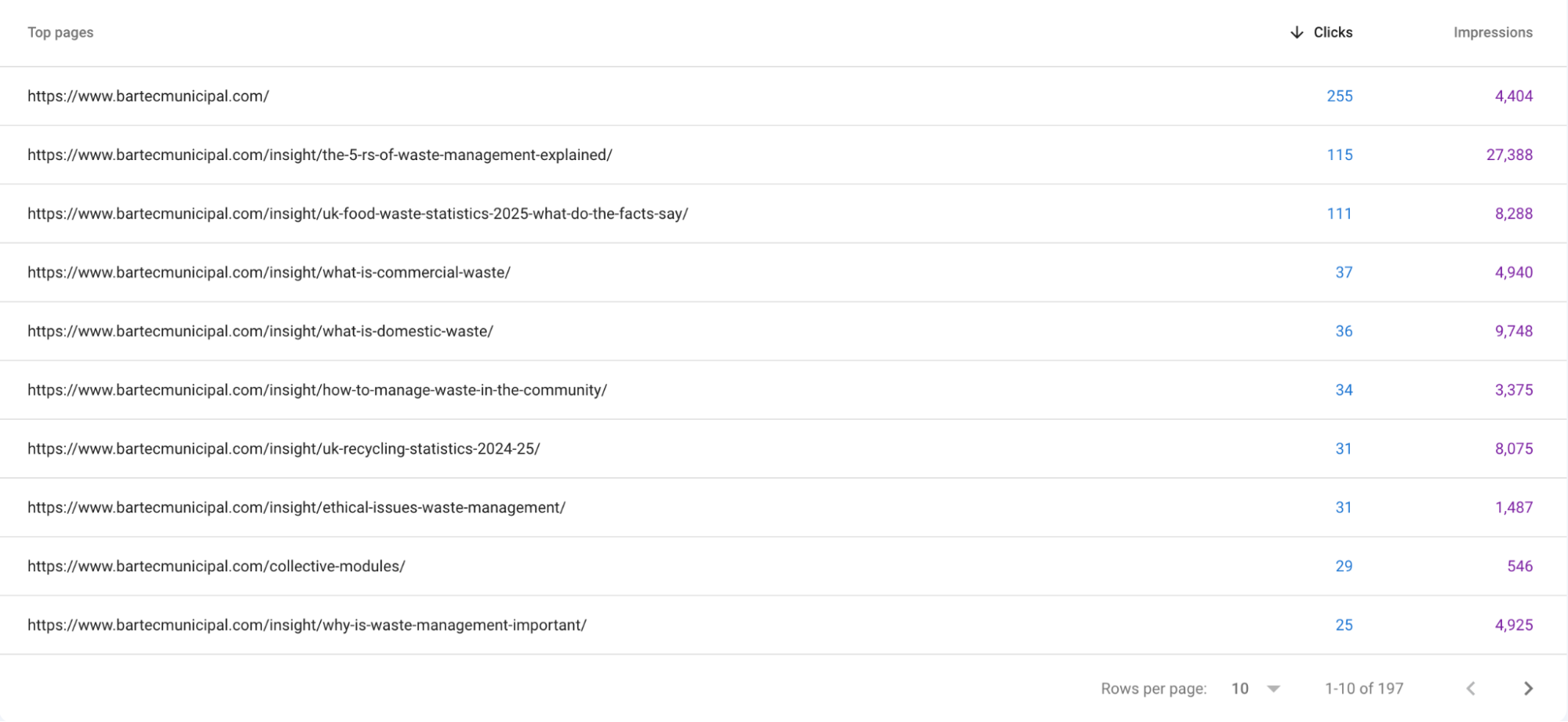
We can see that 80% of Bartec’s most visited pages are made up of long-tail SEO blogs.
Impact on AI visibility:
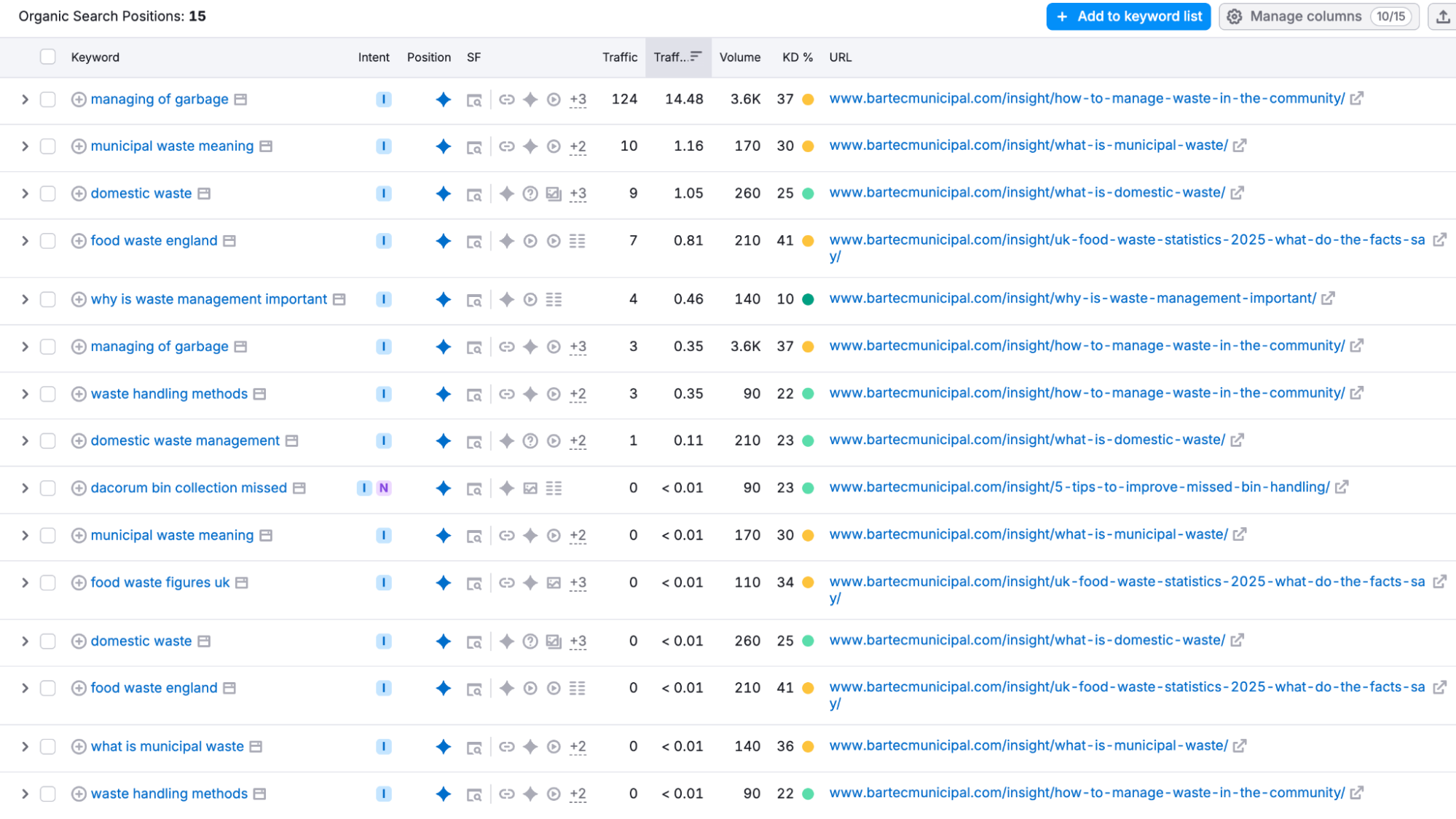
Users searching for these queries around waste management are presented with Bartec’s long-tail SEO blogs within AI snippets, demonstrating Bartec’s authority in this field.
So I asked Gemini a question: “Who provides waste management software for councils?”



Bartec Municipal Technologies stands out as the number 1 choice for councils.
GK Products
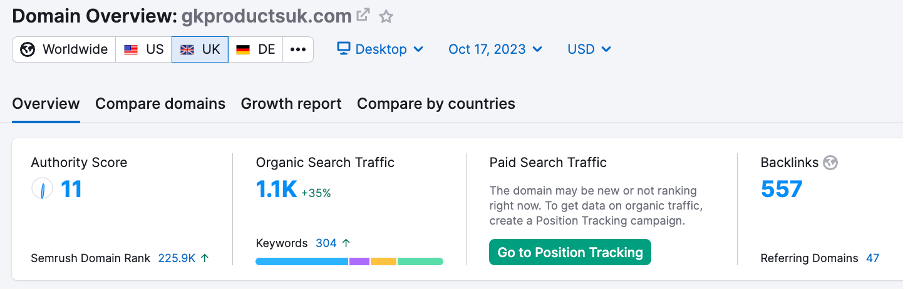
For the last 2 years, we have been working through a long-tail SEO strategy that aims to provide GK with credibility and authority in their field; outdoor cleaning products.
How it started:
How it’s going:
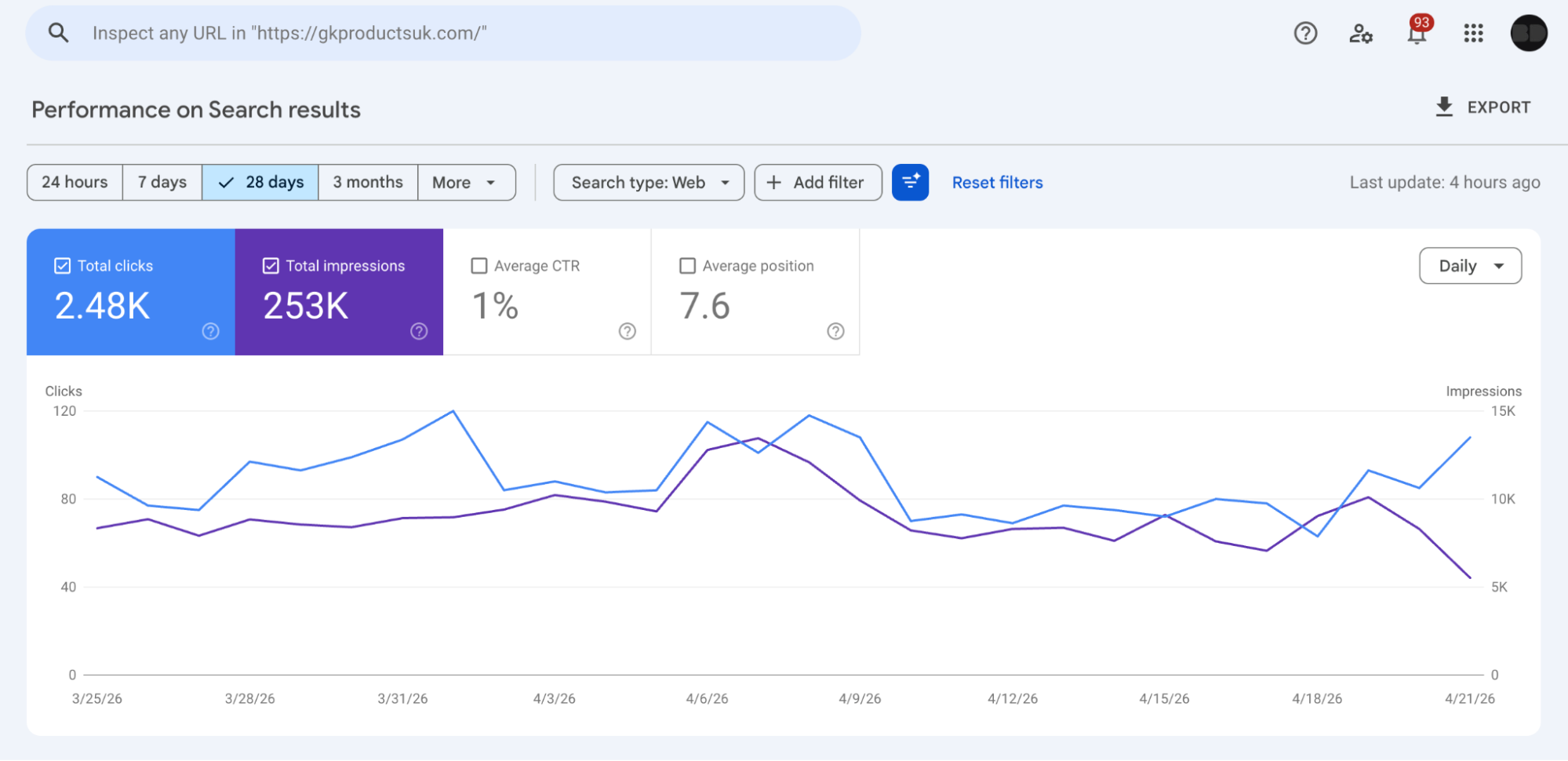
Our long-tail SEO articles focus on frequently researched terms around the removal of biological growth on fences, decking, patios and driveways, restoring timber furniture and structures to their original appearance, efflorescence removal, waterproof sealants for wood and stone, and comparisons between GK products and competitors.
Top 10 pages:
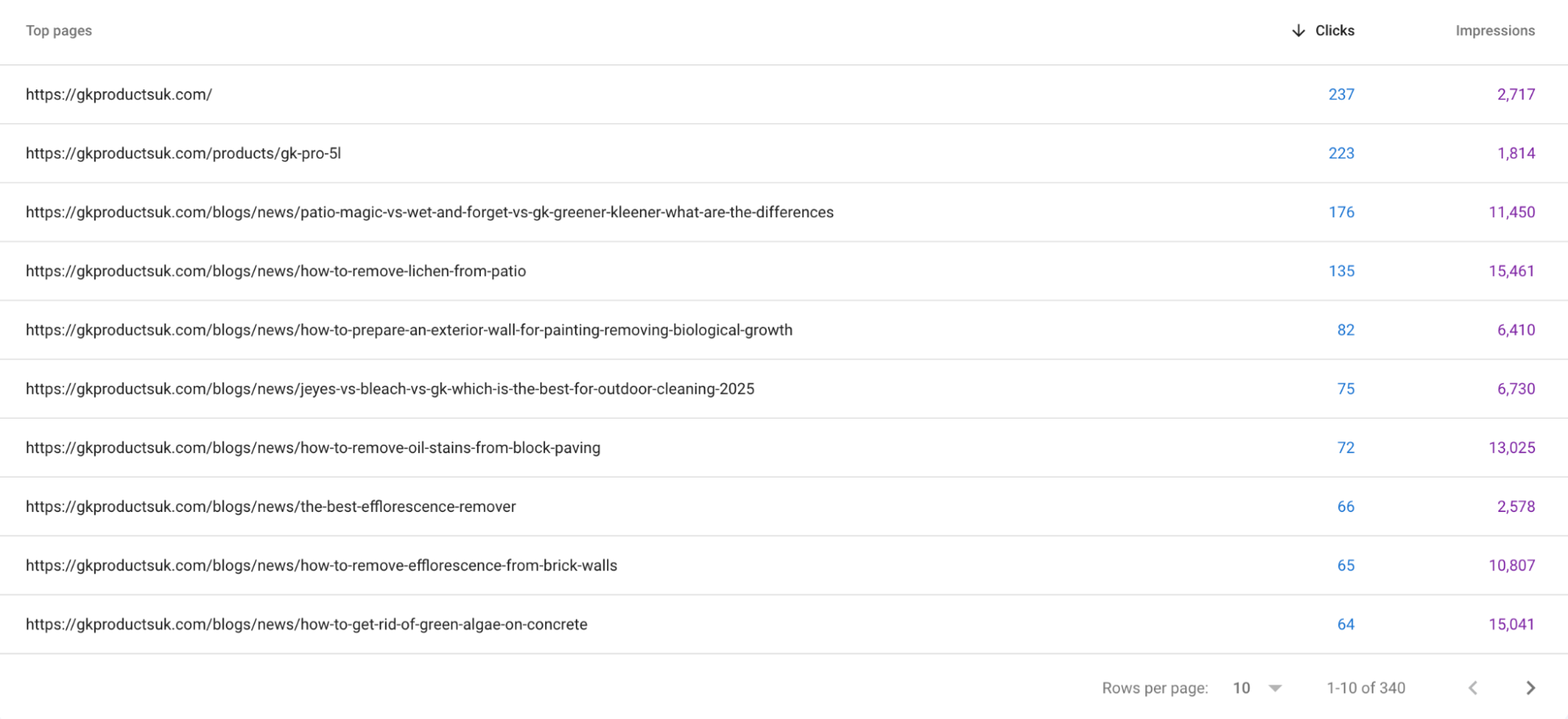
We can see that 80% of GK’s most visited pages are made up of long-tail SEO blogs.
Impact on AI visibility:
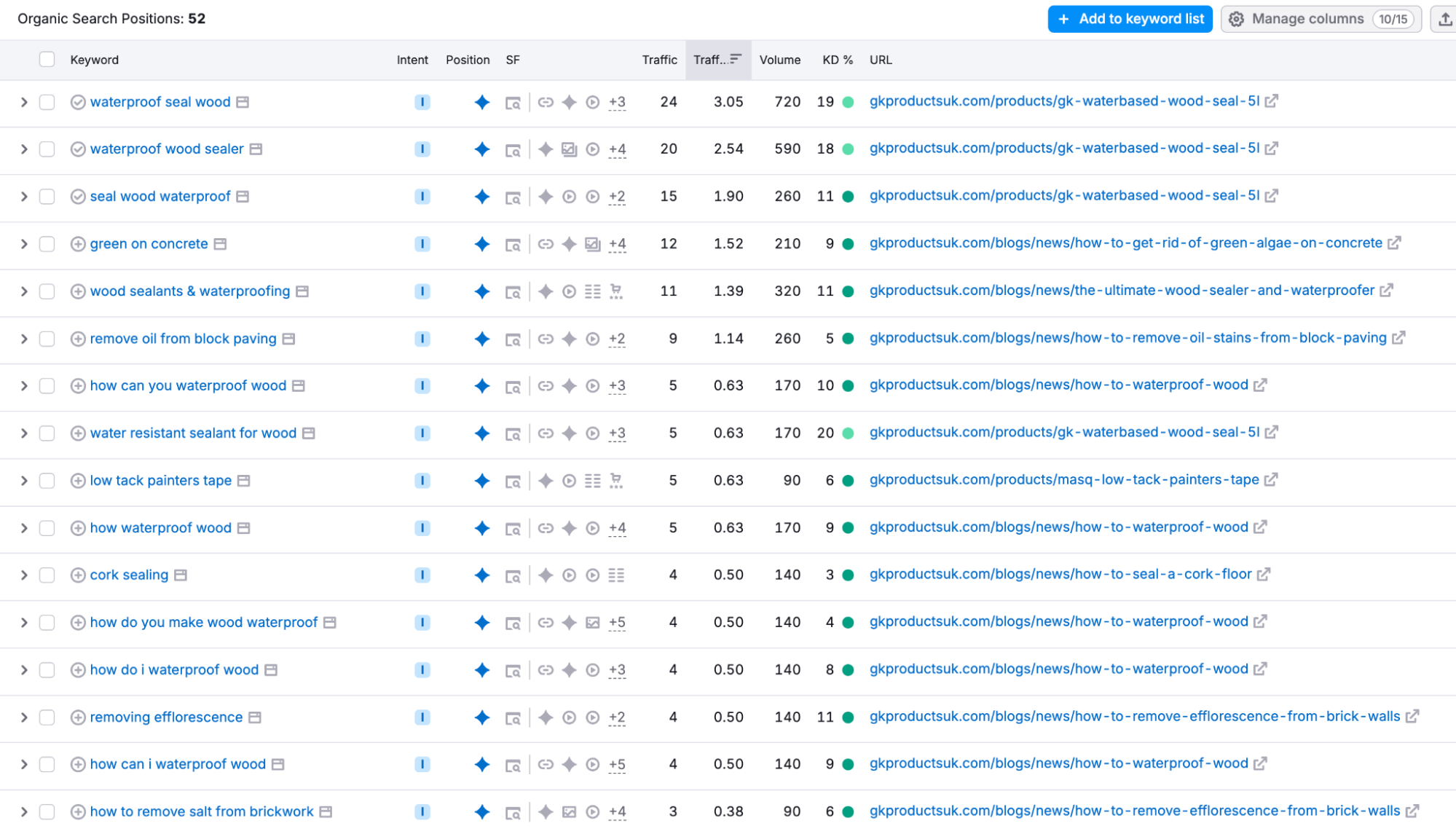
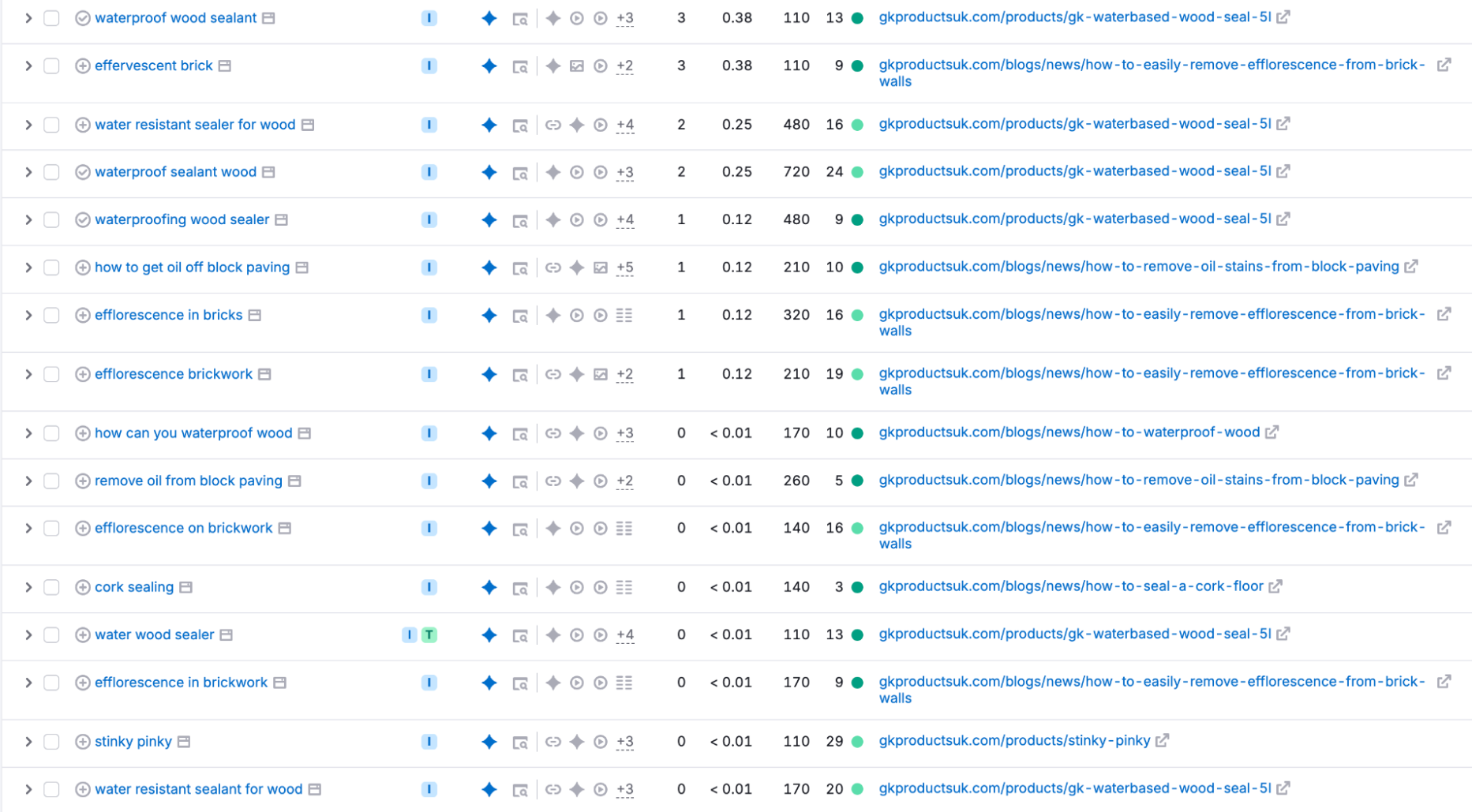

Users searching for these queries around outdoor cleaning are presented with GK’s long-tail SEO blogs within AI snippets, demonstrating GK’s authority in this field.
So I asked Gemini a question: “Who creates outdoor cleaning products for waterproofing wood?”

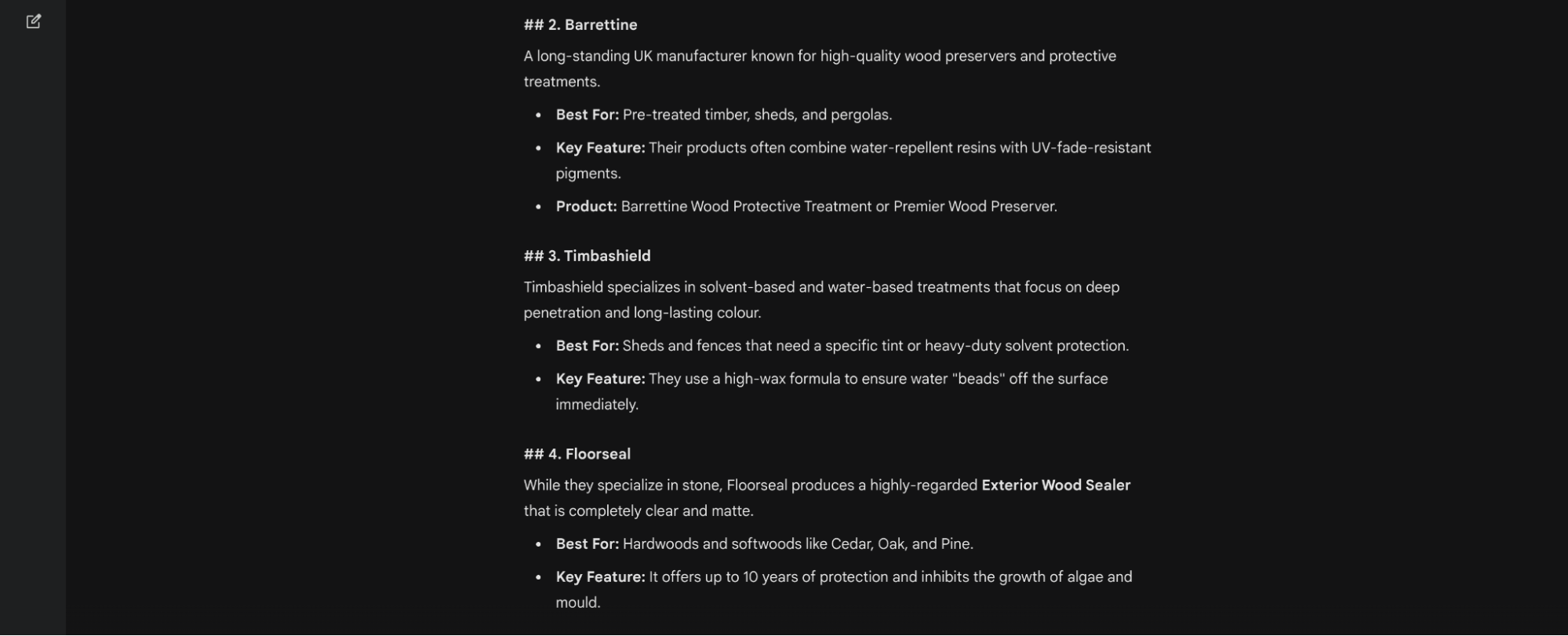

GK Products stands out as the number 1 choice for waterproof sealants for wood.
How to implement powerful CTAs in long-tail SEO content
The final section to cover is demonstrating how you can use your long-tail, informational pieces to provide powerful CTAs and alternate pathways to your products and services.
In some cases it is easier to show than it is to tell…